
MRI vs CT Scan: What's the Difference? South Coast Advanced Imaging
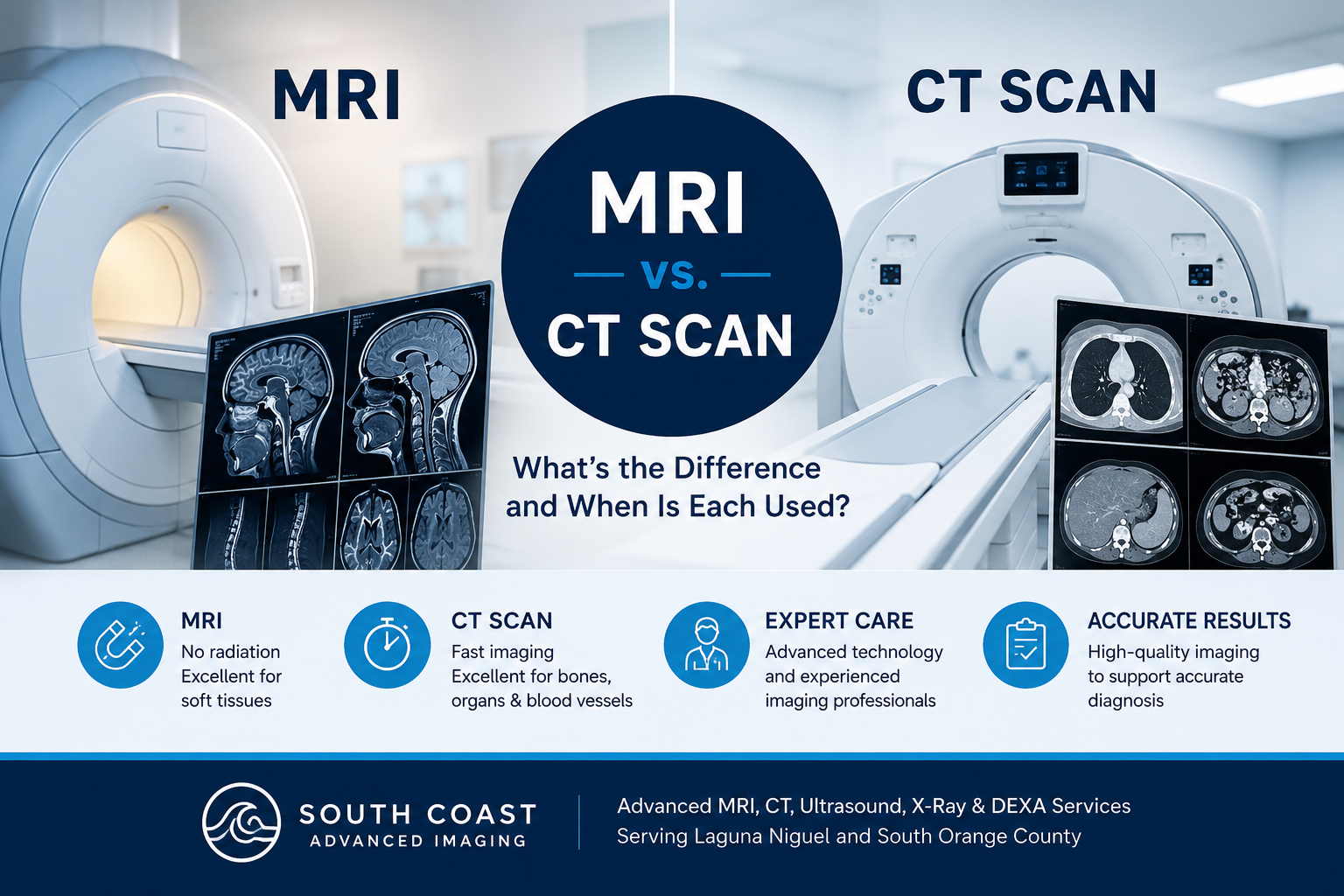
MRI vs. CT Scan: What's the Difference and When Is Each Used?
When a physician orders diagnostic imaging, many patients wonder why they need an MRI instead of a CT scan—or vice versa. While both imaging technologies provide valuable information, they serve different purposes and help physicians evaluate different types of medical conditions.
Understanding the differences between MRI and CT imaging can help patients feel more informed and prepared for their examination.
What Is an MRI?
Magnetic Resonance Imaging (MRI) uses powerful magnets and radio waves to create highly detailed images of the body's internal structures. MRI does not use radiation and is especially effective for evaluating soft tissues.
MRI examinations are commonly used to evaluate:
- Back and neck pain
- Sports injuries
- Joint injuries
- Brain and neurological conditions
- Ligament and tendon injuries
- Spinal disorders
- Chronic pain conditions
High-Field MRI technology provides exceptional image quality that helps physicians diagnose conditions affecting muscles, ligaments, nerves, joints, and soft tissues.
What Is a CT Scan?
Computed Tomography (CT) combines advanced X-ray technology with computer processing to create detailed cross-sectional images of the body.
CT scans are frequently used to evaluate:
- Injuries and trauma
- Chest conditions
- Abdominal pain
- Internal bleeding
- Kidney stones
- Vascular conditions
- Certain cancers
- Bone injuries
Because CT scans can be completed quickly, they are often used when physicians need fast diagnostic information.
MRI vs. CT Scan: Key Differences
MRI
- No radiation exposure
- Excellent for soft tissue evaluation
- Detailed images of muscles, ligaments, joints, and nerves
- Often used for orthopedic and neurological conditions
CT Scan
- Uses X-ray technology
- Fast examination times
- Excellent for evaluating bones, organs, and blood vessels
- Frequently used for trauma and emergency evaluations
Both examinations provide valuable information and are chosen based on the specific condition being evaluated.
Which Imaging Exam Is Right for You?
The best imaging examination depends on your symptoms, medical history, and the information your physician needs to make an accurate diagnosis.
For example:
- A torn ligament may be best evaluated with MRI.
- A suspected kidney stone may be evaluated with CT imaging.
- A spinal condition may require MRI.
- Certain vascular concerns may require CT angiography.
Your healthcare provider will recommend the imaging examination that is most appropriate for your specific situation.
Advanced Diagnostic Imaging in South Orange County
At South Coast Advanced Imaging, we provide High-Field MRI, CT scans, ultrasound, digital X-ray, cardiovascular ultrasound, and DEXA bone density testing for patients throughout Laguna Niguel, Mission Viejo, Lake Forest, Aliso Viejo, Dana Point, and surrounding South Orange County communities.
Our commitment to advanced technology, experienced imaging professionals, and timely reporting helps physicians obtain the information they need to provide exceptional patient care.
Schedule Your Imaging Appointment
If your physician has recommended an MRI, CT scan, ultrasound, or digital X-ray, South Coast Advanced Imaging is here to help. Contact our team today to learn more about our diagnostic imaging services and experience the difference that advanced medical imaging can make.